The Right Order of Work for a Whole-Home Renovation
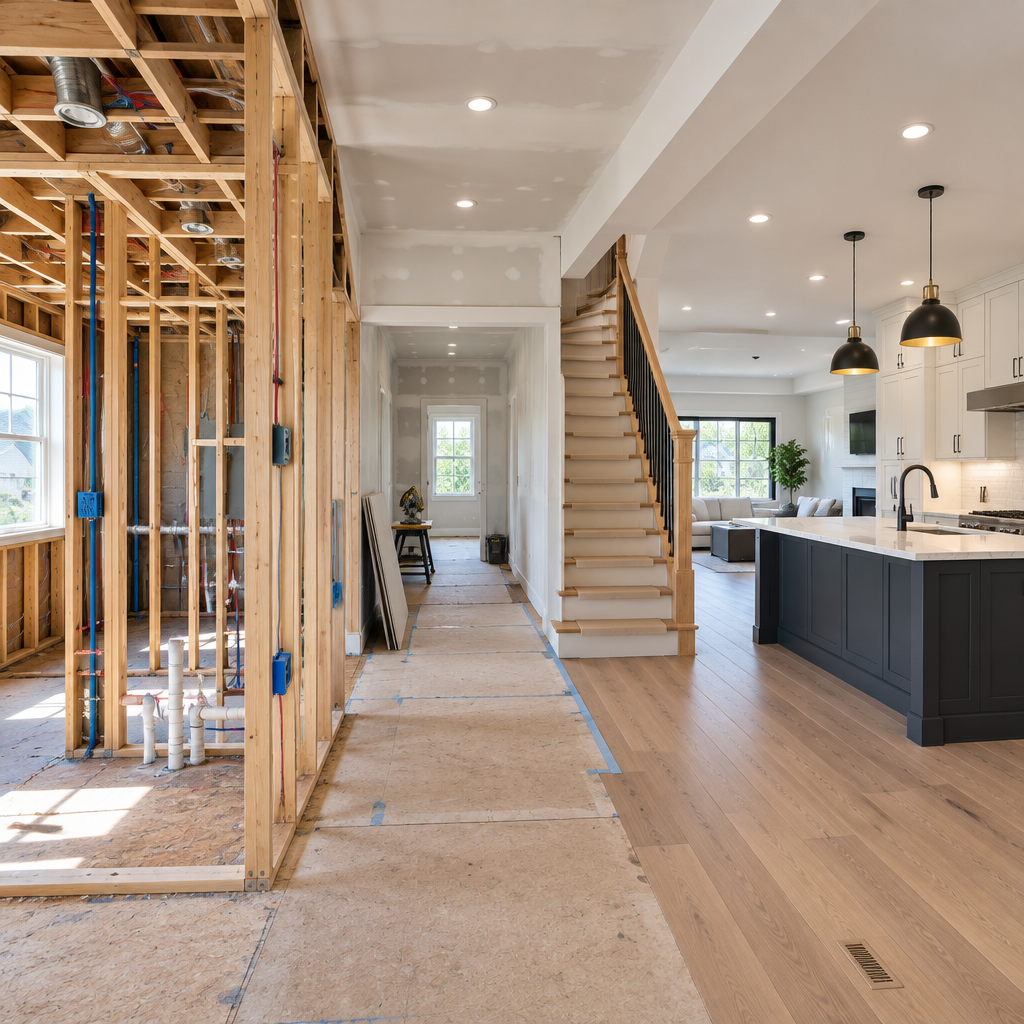
Good sequencing prevents new floors from receiving drywall damage and keeps later trades from cutting through completed fire, air, or waterproofing layers. A defensible plan for whole-home renovation sequence needs to answer three questions: what condition exists now, what outcome is required, and how will the finished work be checked? Clear answers keep the scope factual and make quotations easier to compare.
Start with design, approvals, and procurement
Resolve investigations, permits, structural decisions, long-lead items, temporary services, and protection before broad demolition.
Complete structure and enclosure
Stabilize framing, roof, windows, exterior openings, and water-control details before investing in moisture-sensitive interior finishes.
Coordinate rough-ins before closing
Plumbing, HVAC, electrical, low voltage, backing, fire protection, insulation, and inspections should share one coordinated set and a concealment checklist.
Finish from durable bases outward
Drywall, waterproofing, tile, floors, cabinets, trim, paint, fixtures, commissioning, cleaning, and deficiencies need an order that respects cure and protects completed work.
Planning for GTA conditions
GTA weather and municipal inspections can interrupt the ideal sequence. A realistic schedule includes review time and exterior protection rather than assuming every trade starts immediately. Across the GTA, contractors encounter century homes, post-war bungalows, suburban houses, condos, and mixed-use buildings. A detail from one house may not suit the next. For whole-home renovation sequence, verify the assembly and site conditions before choosing a method that worked on another home.
From site condition to written scope
Use the first site meeting about whole-home renovation sequence to separate must-do work from optional upgrades. Safety, water control, structure, code, and basic function should remain protected when the budget tightens. Decorative choices can then be ranked by value and timing. Ask for alternates that describe exactly what changes, including any effect on warranty, maintenance, energy use, appearance, or future repair. This creates real choices instead of a vague request to make the quote cheaper.
Practical planning checklist
- Procure long-lead items before demolition needs them.
- Reach a dry, stable enclosure early.
- Inspect all rough-ins before closing.
- Protect finished work from later trades.
The takeaway
Use the planning stage to settle the cause, scope, and finish standard before booking the crew. A good sequence reduces rework because each trade receives a ready surface and leaves a protected one. MLB Renovations serves GTA property owners and can prepare a site-based recommendation for the next step.