Living at Home During a Major Renovation: Make a Real Plan
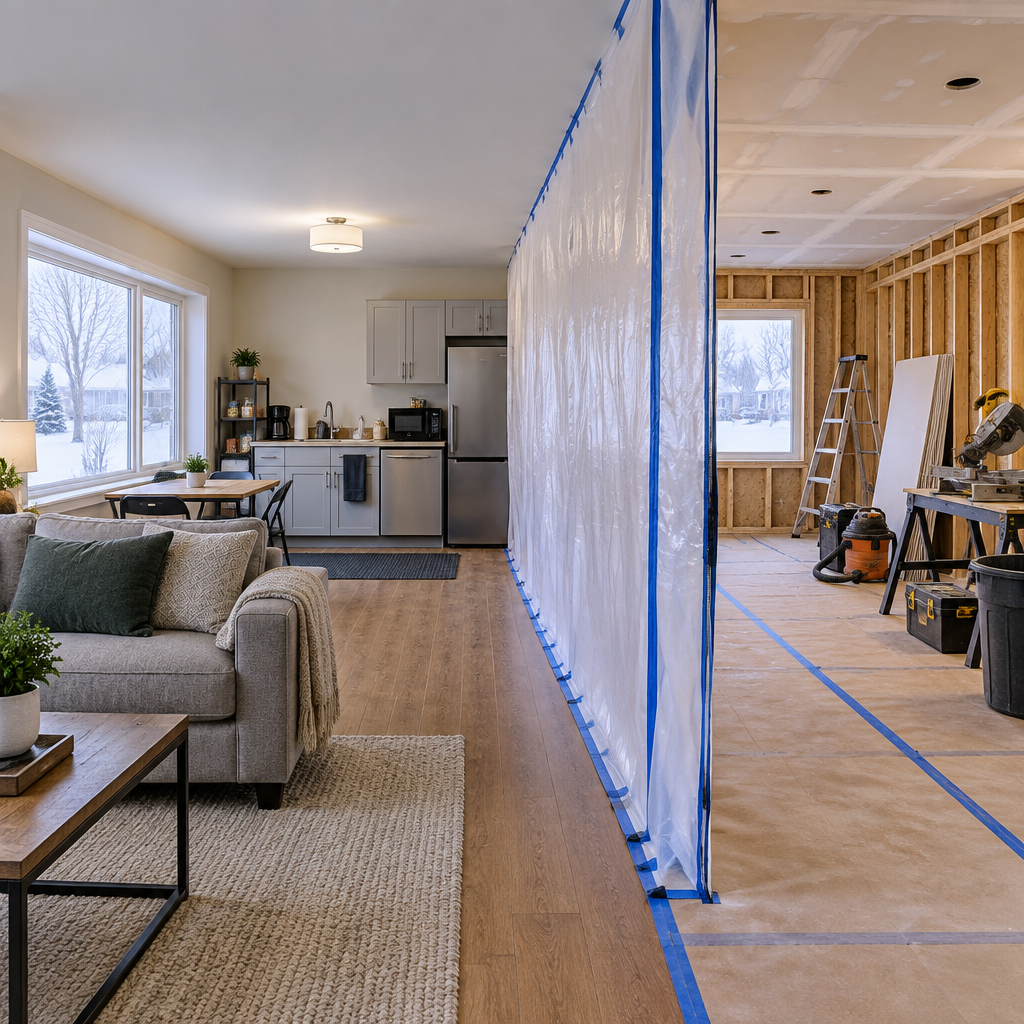
Staying in the house can save accommodation cost, but it can also slow the project and expose the family to dust, noise, outages, and changing access. A standard detail cannot cover every case of living at home during a renovation. The selected method needs to match site conditions, intended use, and adjacent materials, and the homeowner’s time horizon. For that reason, early discovery deserves time before selecting finishes or approving a price.
Create a sealed living zone
Choose rooms with a bathroom, sleeping, storage, ventilation, and a route that does not cross active work. Barriers and negative pressure where appropriate should be part of the contractor’s plan.
Schedule utility interruptions
Water, power, heating, cooling, internet, alarms, and laundry may be unavailable at times. Set notice periods, backup arrangements, and emergency contacts.
Design temporary daily functions
A temporary kitchen needs safe appliances, water, refrigeration, food storage, and cleanup. Remote work and school need quiet periods and reliable internet.
Set move-out triggers
Hazardous material work, structural phases, open exterior walls, prolonged loss of heat, or inaccessible exits may require temporary relocation. Agree on the decision process in advance.
Planning for GTA conditions
GTA winters make heating loss and open envelopes serious, while small urban homes may have no separate living zone. Staying should be a site-based safety decision. GTA projects are shaped by weather and access. Short exterior seasons, sudden rain, winter temperature swings, narrow side yards, shared driveways, and condo delivery rules can affect the plan for living at home during a renovation. A credible timeline makes room for those conditions so they do not become last-minute surprises.
Turn the advice into a project scope
A practical scope for living at home during a renovation should make sense to an owner outside the trade. It should state the starting condition and defined method, product or performance requirements, site protection, cleanup, timing, and exclusions, and a completion check. Ask what may change once the area is opened and how any approval will be documented. With those decisions recorded before mobilization, the homeowner can compare value without relying on a promise that everything normal is included.
Practical planning checklist
- Draw the occupied and construction zones.
- Create notice rules for service outages.
- Build a safe temporary kitchen and work plan.
- Agree on conditions that require moving out.
The takeaway
The objective is not to maximize the work sold. The priority is a right-sized scope for living at home during a renovation, with enough detail to understand the price and judge the result. The cheapest accommodation choice is not worthwhile if it compromises health, safety, or construction efficiency. For a GTA review based on the property, contact MLB Renovations through
https://mlbrenovations.com/.